
Manga Inking Techniques: Pen, Brush, and Digital Methods Explained
Learn professional manga inking techniques. Master G-pen, maru pen, brush inking, and digital inking workflows used by real mangaka.
The Critical Role of Inking in Manga Production
Inking is arguably the most important technical skill in manga creation. While pencil sketches form the foundation of a manga page, inking is what brings those drawings to life. The quality, consistency, and style of your inking directly determines whether your manga looks amateur or professional. Professional inkers are highly valued in the manga industry because their work can transform good pencil art into exceptional finished pages.
Inking serves multiple crucial functions in manga production. First, it converts light pencil lines into bold, readable lines that remain visible even after printing at small sizes or in low-quality reproductions. Second, it adds tonal variation through techniques like hatching and cross-hatching, creating depth and dimension without using colors or grayscale values. Third, the style and weight of ink lines conveys information about character emotions, atmospheric conditions, and narrative pacing. A character drawn with heavy, bold lines feels different from one drawn with delicate, thin lines.
Many aspiring mangaka underestimate the importance of inking, thinking they can skip straight from pencil sketches to publication. This approach inevitably results in work that appears unfinished. Professional manga pages go through a dedicated inking phase where artists take their time to apply consistent line weight, add necessary details, create texture through hatching, and ensure that every line serves a purpose in the final composition.
Traditional Inking Tools and Materials
The G-Pen: The Manga Artist’s Essential Tool
The G-pen is the most iconic tool in manga inking and the first tool any aspiring mangaka should master. Despite its intimidating reputation among beginners, the G-pen is an incredibly powerful tool once you understand how it works and develop the control to use it effectively. The G-pen’s name comes from its distinctive shape—a small metal nib with a split point that resembles the letter G.
The mechanics of the G-pen are what make it essential for manga work. As you apply pressure to the nib while dragging it across paper, the two points of the nib separate, allowing more ink to flow onto the paper and creating a thicker line. When you reduce pressure and move quickly, the nib points come together, creating thin lines. This pressure-responsive quality allows an artist to create tremendous variation in line weight using a single tool, which is perfect for manga’s need to emphasize important elements and create visual hierarchy.
To use a G-pen effectively, load it with ink using an ink bottle or ink cartridge. Hold the pen at an angle that allows the nib to move smoothly across the paper—typically around a 45-degree angle for most strokes. Practice drawing long, confident strokes before attempting detailed work. Many beginners fail with G-pens because they hesitate or use short, tentative marks. The G-pen works best with confident, flowing movements.
The learning curve with G-pens is steep, but the investment is worthwhile. Start by practicing basic lines: horizontal lines, vertical lines, curves, and wavy lines. Once you can execute these fundamental marks smoothly, graduate to drawing simple shapes like circles and rectangles, then more complex forms like character outlines.
The Maru Pen for Fine Detail Work
While the G-pen creates dramatic line weight variation, the maru pen provides consistent line width, making it ideal for detailed linework and fine details. The maru pen (also called a round pen or ball-point pen for inking) has a small, spherical tip that deposits ink at a consistent width regardless of pressure applied.
Maru pens are excellent for defining character features, adding facial details, drawing clothing folds, and creating uniform lines. Many professional mangaka use a combination of G-pens for bold outlines and dramatic line weight variation, with maru pens for details and consistency. The consistent line width of maru pens can feel mechanical compared to G-pen linework, so many artists reserve maru pens for specific purposes rather than using them for entire pages.
Maru pens come in different sizes—typically 0.3mm, 0.5mm, 0.7mm, and 1.0mm widths. A 0.5mm or 0.7mm maru pen is suitable for most manga detail work. Having several different widths allows you to create variation through multiple tools rather than pressure-responsive techniques.
Brush Pen Inking for Flowing Lines
Brush pens or brush inking tools provide another approach to manga inking, creating organic, flowing lines with more natural variation than maru pens but requiring less pressure control than G-pens. Some manga artists prefer brush pens because they feel more natural to hold and control compared to metal nib pens.
Brush pens designed for manga inking have flexible tips that respond to pressure variation, allowing line weight changes through directional control rather than just pressure. These pens work particularly well for flowing hair, organic shapes, and creating movement in linework. Professional brush inking requires developing a steady hand and confident brush technique, but many artists find the learning curve less steep than with G-pens.
India Ink and Inking Solutions
The ink you use significantly impacts your inking work. Professional manga inking traditionally uses India ink—specifically, black India ink with good flow and opacity. India ink should flow smoothly from your pen without becoming too diluted or too viscous. Some dedicated manga artists use ink specifically formulated for manga inking, which is optimized for the pens and techniques used in manga production.
Alternative inking solutions include Pilot drawing ink, which is popular among professional mangaka, and various brands specifically marketed for comics and manga. Experiment with different inks to find which works best with your chosen pens and personal technique. The wrong ink can cause your pen to skip, glob, or produce inconsistent lines.
Proper ink storage is important—keep ink bottles sealed when not in use, and store them upright. Ink that’s exposed to air can thicken or dry out, affecting consistency. Many artists keep their current inking solution in a small well or shallow dish while working, allowing them to easily reload their pens without handling large ink bottles repeatedly.
Paper Selection for Traditional Inking
The paper you ink on dramatically affects the quality of your linework. Standard copy paper is unsuitable for professional manga inking because its surface is too smooth and slippery for controlled pen movement, and it often absorbs ink unevenly. Professional manga artists use specialized papers designed for inking.
Comic board or manga board is the standard for professional work. These papers have slightly textured surfaces that allow pens to glide smoothly while maintaining control. They’re also processed to accept ink consistently without feathering or bleeding through. Quality manga board is more expensive than standard paper, but the improvement in your inking work justifies the cost.
Watercolor paper can work for inking, though it requires careful technique because its textured surface can snag pens and create uneven lines if you’re not careful. Hot-pressed watercolor paper works better than cold-pressed for inking.
Inking Techniques and Applications
Line Weight and Visual Hierarchy
One of the fundamental purposes of inking is establishing visual hierarchy through line weight variation. Different line weights draw attention and communicate information without adding color. Thick, bold lines naturally draw the eye and suggest importance or emphasis. Thin, delicate lines recede visually and convey less emphasis.
In manga character design, the character outline is typically darker and heavier than internal details like facial features. This creates a clear visual separation between the character and their environment. Similarly, the nearest elements in a scene are rendered with heavier lines, while distant elements use lighter lines, creating atmospheric perspective.
Professional mangaka use line weight to guide reader attention through the page. An important plot point might be emphasized with dramatically heavy linework, while background details might use significantly lighter lines. This technique allows readers to subconsciously understand what’s important without consciously analyzing the linework.
Hatching and Cross-Hatching Techniques
Traditional manga inking cannot rely on grayscale values or colors to create shading and texture. Instead, hatching—parallel lines drawn close together—and cross-hatching—overlapping layers of hatching—create the illusion of shadow, texture, and three-dimensional form.
Hatching works by exploiting the way human eyes blend closely-spaced lines together. When you view parallel lines from a distance, your brain interprets them as a shade of gray. Closer lines create darker values; lines spaced further apart create lighter values. The direction of hatching also communicates information: vertical hatching might suggest fabric drape, while diagonal hatching might suggest shadow or texture.
Cross-hatching involves layering hatching in different directions, typically at 45-degree angles to each other. This technique creates rich, complex tones and textures. Many manga artists use hatching extensively to create atmospheric effects, shadow areas, and textural details that make their pages more visually interesting.
The angle and spacing of hatching lines should be considered carefully. Regular, consistent hatching appears clean and controlled. Varied, organic hatching can create a rougher, more atmospheric effect. Some manga artists use curved hatching rather than straight parallel lines, which can create more organic, dimensional effects.
Speed Lines and Effect Lines
Speed lines (also called action lines or motion lines) are a distinctive technique in manga where parallel lines around a moving object suggest motion and velocity. These aren’t realistic representations of motion—they’re a manga convention that effectively communicates action and speed to readers.
Speed lines radiate from moving objects or follow the direction of motion. A character running might have speed lines flowing behind them. A fist striking might have speed lines emanating from the fist. Multiple layers of speed lines create a sense of extreme velocity, while fewer lines suggest slower motion.
The key to effective speed lines is making them purposeful and consistent. They should flow logically in the direction of movement, and their density should correspond to the intensity of the action. Novice manga artists often make speed lines too random or poorly integrated, disrupting the composition. Professional artists integrate speed lines as part of the overall panel composition rather than adding them haphazardly.
Effect lines extend beyond just speed and action—they can represent wind, energy, emotion, or environmental phenomena. Manga uses effect lines extensively to communicate information that would require description in other media.
Digital Inking Workflows
Clip Studio Paint: The Professional Standard
For modern manga artists, digital inking has become increasingly prevalent. Clip Studio Paint is the industry standard for digital manga creation because its tools are specifically designed for manga production rather than being adapted from general illustration software.
Clip Studio Paint offers realistic pen and brush simulations that closely mimic traditional inking tools. The G-pen simulation is particularly praised because it captures the pressure-responsive line weight variation of traditional G-pens. This allows artists to develop traditional inking technique skills that translate between digital and traditional media.
The software also includes features specifically valuable for manga: 3D models for reference, speech bubble and panel creation tools, screentone libraries for traditional manga toning, and brush stabilization that helps smooth out shaky lines. Many professional mangaka work entirely within Clip Studio Paint, from initial pencil sketches through final inking and toning.
Procreate and Other Digital Tools
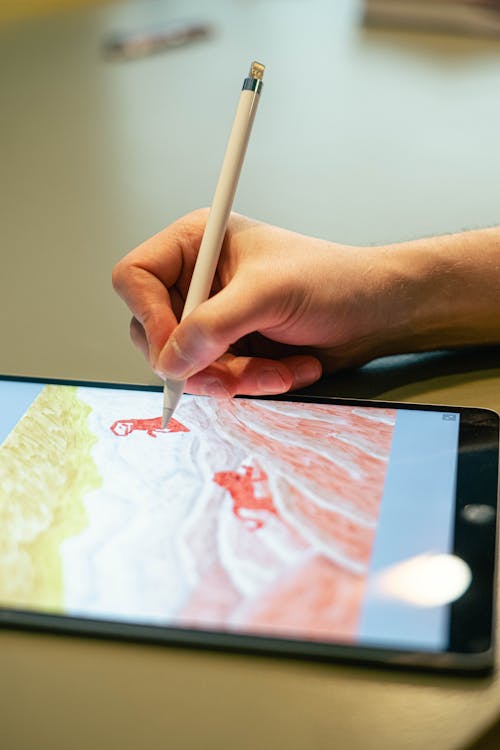
Procreate is another popular digital inking platform, particularly for iPad-based artists. While Procreate wasn’t specifically designed for manga, its brush engine is powerful and flexible, allowing artists to create custom brushes that simulate manga inking tools. The iPad’s stylus technology has become sophisticated enough that many artists achieve results comparable to desktop applications.
Other options include Adobe Photoshop (with custom brushes), Medibang Paint, and various drawing applications. The specific application matters less than mastering the inking concepts and techniques—the tools merely provide different implementations of the same fundamental principles.
Brush Settings and Pen Configuration
Digital inking success depends heavily on proper brush configuration and stylus settings. Even the best digital tools can produce poor results with improper settings. Most professional digital inking brushes use some form of pressure sensitivity to vary line weight, mimicking traditional inking tool behavior.
Brush stabilization is important for smooth lines. Most digital art applications include smoothing or stabilization settings that help eliminate shakiness in your strokes. However, excessive stabilization can make lines feel artificial and lose the organic quality of hand-drawn inking. Finding the right balance between smoothness and organic feel is crucial.
Stylus pressure curves should be configured so that light pressure produces thin lines and heavy pressure produces thick lines, simulating traditional inking tool behavior. Many artists configure pressure sensitivity more aggressively than the default settings to achieve greater line weight variation with smaller pressure changes.
Common Inking Mistakes and Solutions
Over-inking and Over-Detailing
A common beginner mistake is inking too much detail. Remember that inking serves to clarify and emphasize the pencil sketch, not to add entirely new information. Every inked line should serve a purpose—defining character outlines, emphasizing important features, creating texture, or establishing composition.
Over-inked pages look cluttered and overwhelming. Viewers can’t focus on important elements because everything receives equal visual weight. The solution is careful editing—before inking each area, ask yourself whether that line is necessary. Often, removing 20-30% of potential linework makes pages significantly more effective.
Inconsistent Line Weight
Inconsistent line weight across a page creates a disjointed appearance that reads as unprofessional. While variation in line weight is desirable for creating visual hierarchy, this variation should be intentional and consistent. A character’s outline should maintain consistent line weight throughout the page, not randomly varying from thick to thin.
Developing consistency requires practice and patience. Many artists create test samples using their chosen inking tool and paper combination, practicing standard strokes until they develop muscle memory. This muscle memory allows you to execute consistent linework without conscious effort.
Ink Bleeding and Feathering
Ink bleeding (where ink spreads beyond your intended line) and feathering (where line edges become rough or fuzzy) both result from incompatible pen, ink, and paper combinations, or from incorrect technique. Test your materials before committing to major pages.
If you experience bleeding, try different paper stock, reduce ink viscosity, or use different pens. If feathering occurs, your paper might be too smooth (if using certain pens) or you might be pressing too hard. Adjusting pressure and pen angle often solves feathering problems.
Lack of Confidence in Linework
Hesitant, tentative lines are perhaps the most damaging inking mistake. Confident lines look professional and energetic; hesitant lines look amateurish and weak. This often requires overcoming fear of making mistakes and trusting your technique.
The solution is practice and acceptance that some pages will require inking multiple times. Many professional artists keep backup versions of pencil sketches so they can re-ink pages that don’t meet their standards. Building confidence comes from repeated successful inking sessions.
Choosing Between Traditional and Digital Inking
Both traditional and digital inking have advantages and disadvantages. Traditional inking creates unique, irreproducible marks that many artists and readers find more aesthetically satisfying. Digital inking allows for easy corrections, unlimited undo commands, and seamless integration with digital publishing workflows.
The choice often depends on personal preference, intended publication method, and workflow efficiency. Some professional mangaka use traditional inking for pencil-drawn pages, scanning the inked pages for digital clean-up and publishing. Others work entirely digitally from pencil sketch through final inking. Experiment with both approaches to determine which suits your working style.
Building Mastery Through Dedicated Practice
Inking is a technique that improves dramatically with dedicated practice. Start by practicing basic marks and strokes with your chosen tools until you develop the muscle memory for consistent, controlled linework. Graduate to inking simple character outlines and faces before attempting full page inking.
Dedicate practice sessions to specific techniques—one week focusing on G-pen control, another on hatching techniques, another on effect lines. Keep reference samples of professional manga pages and study how other artists execute their inking. Identify techniques you admire and practice replicating them until you make them part of your own artistic vocabulary.
Conclusion
Inking is the critical bridge between pencil sketches and professional manga pages. Whether you work traditionally with G-pens and India ink or digitally with Clip Studio Paint, mastering inking techniques is non-negotiable for aspiring professional mangaka. The tools and methods may vary, but the fundamental principles—line weight, confident execution, purposeful technique, and consistent style—remain constant.
Invest time in learning your chosen inking tools thoroughly. Practice regularly, study professional work, and gradually build the skills and confidence that transform your pencil art into professional-quality inked pages. Your dedication to inking excellence will be rewarded with pages that look professional, communicate clearly, and impress readers and publishers alike.
Related Articles
6 Best Drawing Tablets for Manga Artists in 2026 (Tested & Compared)
We compared the 6 best drawing tablets for manga art — from Wacom to Huion to iPad. Full reviews, pros/cons, comparison table, and our honest pick for every budget.

How to Create Memorable Manga Characters: The Complete Guide
Learn how to design compelling manga characters with depth, visual identity, and emotional resonance. From concept to final design.

How to Draw Manga Characters from Scratch: The Complete Guide
Learn to draw manga characters step by step. Master proportions, facial features, hair styles, poses, and expressions with our comprehensive drawing guide.
